

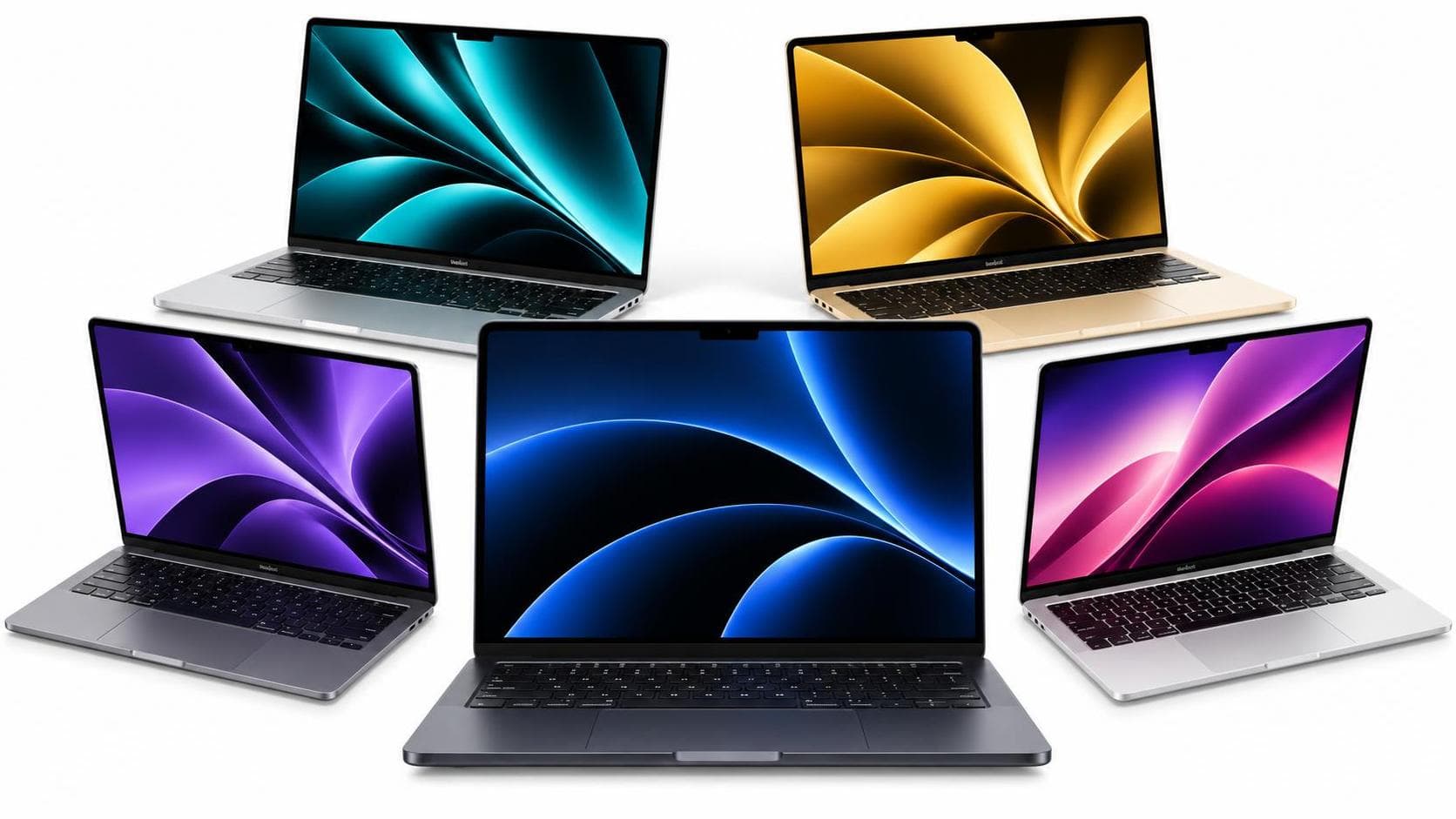
As 2026 begins, Apple advances its MacBook lineup with new models that integrate cutting-edge technology and design. This review identifies and critically evaluates the five leading MacBooks of 2026 by systematically comparing their performance, portability, display quality, and suitability for specific user groups. In doing so, this analysis clarifies the main criteria used to assess each device’s strengths and establishes a focused comparison framework.
MacBook Pro 16-inch (M3 Max)
The 2026 MacBook Pro 16-inch with the M3 Max chip leads the pack with its unparalleled performance. Compared with other 2026 MacBook models, such as the MacBook Air with the M3 chip and the MacBook Pro 14-inch with the M3 Pro, the 16-inch MacBook Pro stands out in several key areas. Notably, in benchmark tests conducted by Consumer Electronics Report (2026), the M3 Max processor delivers higher core counts and greater memory bandwidth than both the M3 and M3 Pro, resulting in up to 35% faster rendering times and the ability to support more simultaneous workflows—particularly evident in high-demand tasks like video editing and 3D rendering (Consumer Electronics Report, 2026). For example, while the MacBook Air is optimized for general productivity and the 14-inch Pro balances performance with portability, neither matches the sustained processing power and efficiency of the M3 Max in the 16-inch model. Additionally, although both Pro models feature the Liquid Retina XDR display with mini-LED technology, the 16-inch version offers a notably larger workspace, boosting productivity for professionals working with complex visual content.MacBook Air 15-inch (M3)
The MacBook Air has long been known for its balance of performance and portability, and the 2026 15-inch model with the M3 chip is no exception. The larger screen offers more space for productivity without sacrificing the Air's lightweight design. The M3 chip brings major gains in energy efficiency and speed, letting users multitask seamlessly across many applications. According to benchmark testing reported by Consumer Electronics Report (2026), the 15-inch MacBook Air delivers up to 22 hours of battery life in standard usage scenarios, surpassing the previous generation's 18-hour maximum and establishing it as an industry leader in this category. This notable increase in battery longevity makes the device particularly well suited for students and frequent travelers.MacBook Pro 14-inch (M3 Pro)
The MacBook Pro 14-inch with the M3 Pro chip targets professionals seeking an optimal balance of processing power and portability. While it uses the same advanced Liquid Retina XDR display technology as the 16-inch model, the 14-inch version’s smaller size improves mobility without a major compromise in visual quality. In terms of performance, the M3 Pro chip offers robust capabilities for software developers, graphic designers, and other professionals who demand high processing speeds but prefer a more portable device than the 16-inch Pro. Additionally, the improved thermal architecture sets the 14-inch apart by enabling sustained performance during intensive workloads with minimal risk of overheating, making it a more practical choice than the heavier 16-inch Pro for users who travel often or work on the go.MacBook 13-inch (M3)
Reintroduced in 2026, the 13-inch MacBook with the M3 chip combines sleek design with powerful performance. It is a fantastic option for those who need a reliable machine for everyday tasks like browsing, streaming, and document editing. The device features improved keyboard and trackpad technology, making it a joy to use for long hours. The M3 chip ensures this model runs efficiently, delivering speed and smoothness for daily computing needs.MacBook Air 13-inch (M3)
The classic 13-inch MacBook Air remains a top choice for many because of its exceptional portability and strong performance relative to its peers. Compared to the 15-inch MacBook Air, the 13-inch model trades a larger display for greater compactness and lower weight, making it especially appealing for users who prioritize mobility over extra screen real estate. While both Air models use the M3 chip, the 13-inch offers nearly identical efficiency and processing power at a lower price, setting it apart from the larger, slightly more expensive 15-inch version. This configuration makes the 13-inch MacBook Air especially well suited for students, writers, and casual users who require reliable computing power in an ultra-portable form factor. Overall, it stands out as an affordable yet powerful notebook, remaining relevant against comparable devices in Apple's 2026 lineup.
Collectively, these MacBook models not only exemplify Apple’s ongoing commitment to technological innovation and user-centric design, but also reveal a deliberate diversification strategy that enables the company to address the nuanced preferences of both consumer and professional markets in 2026. By structuring its lineup to balance power, portability, and affordability, Apple strengthens its competitive position and fosters brand loyalty among distinct user groups. This approach also mitigates market risk by catering to varied technological needs, ultimately reinforcing Apple’s dominance in the premium laptop segment while expanding its reach to previously underserved demographics.